OSCAR Celebration of Student Scholarship and Impact
Categories
College of Humanities and Social Science OSCAR Top Presenter

Othering in We Were Here

Author(s): Ali Faris

Mentor(s): Laura Scott, English

Othering in We Were Here
By Ali Faris, with the gracious guidance of Professor Laura Scott and Dr. Kristin Samuelian
George Mason Creative Writing Department

Abstract:

We live in an era of rising fascism and imperialism, and the war in Ukraine is the latest example. At the core of these movements a similar trait is shared, that of othering- dehumanizing the opposing party for the benefit of the aggressor. My creative thesis, written for the English Honors program and under the mentorship of Dr. Kristin Samuelian and Professor Laura Scott, is a work of speculative fiction that addresses the concept of Othering as its main thematic core. In a world of tomorrow, a society has burgeoned forth whose government is able to breed and exploit in-vitro bio-synthetic oxygen based humanoid beings birthed to be used and taken advantage of for their essence. Whole forests have been siphoned and used up for breeding these O2s, after which they are harvested and taken on a train to be valved at their napes. This story allows the reader to analyze the unequal power dynamic between O2s and the rest of society, and study how certain people blindly and purposefully use and objectify others. Through the interactions of my story’s principal characters, instances of finding humanity in the other- between O2s and everyone else- works as a way to break the mold of societal conditioning, becoming imperative in order to permanently change the way of things for the better, with justice and equality for all.

Keywords: Literature, Science Fiction, Othering, Society, Speculative Fiction

Othering in We Were Here
By Ali Faris, with the gracious guidance of Professor Laura Scott and Dr. Kristin Samuelian
George Mason Creative Writing Department
Transcript:
Hello everyone! Hope you’re all living well and fulfilled and enjoying today. I wanted to talk to you about my Honors Thesis project, which examines Othering in the world of my developing novella, We Were Here.
We live in an era of rising fascism and imperialism, and the war in Ukraine is the latest example. At the core of these movements a similar trait is shared, that of othering- dehumanizing the opposing party for the benefit of the aggressor.
My creative thesis, written for the English Honors program and under the mentorship of Dr. Kristin Samuelian and Professor Laura Scott, is a work of speculative fiction that addresses the concept of Othering as its main thematic core.
In a world of tomorrow, a society has burgeoned forth whose government is able to breed and exploit in-vitro bio-synthetic oxygen based humanoid beings birthed to be used and taken advantage of for their essence. Whole forests have been siphoned and used up for breeding these O2s, after which they are harvested and taken on a train to be valved at their napes.
This story allows the reader to analyze the unequal power dynamic between O2s and the rest of society, and study how certain people blindly and purposefully use and objectify others. Through the interactions of my story’s principal characters, instances of finding humanity in the other- between O2s and everyone else- works as a way to break the mold of societal conditioning, becoming imperative in order to permanently change the way of things for the better, with justice and equality for all.
The following passage is from the third section in my story, chosen with the hopes of illustrating a bit of backstory for the audience to become more familiar with my world. Thank you!

***
He sighed and looked to Ilsa, who, regardless of the sorry existence that had manifested out of the pandora’s box of that rainy night, had still entered into his life, a non-judgmental grace. Whose music transformed, like magic, herself and her listeners. Who reminded all to remember the sacredness of every single moment.
Ilsa, whose melodies had drawn the attention of crowds from all around the country, yet who’d stow away with Rick in a booth deep in the annals of Salvation after a set, covered up and content with having a cold beer with her old confidant. Ilsa, who years from now would look back on her days with Rick Matthews with charm and fondness, a gentle man who she considered a guardian as much as a neighbor, a father as much as a friend, even if she felt his reservedness, his unwillingness to spend too much time together. Ilsa understood that their friendship required distance. She never felt alone knowing Rick lived next door, even though he never knocked, and was happy to know his ears and eyes would be in the crowd at Salvation every night that she performed with her band of percussionists, even though she’d rarely spot him when they’d play.
It was Rick who’d seen Ilsa crying on her front porch one night, after returning from her first and only gig at the commander of the Corps, Madame Derangé’s, mansion. It was the first time Rick had come near Ilsa’s property. With a swiftness unexpected for his age, he’d gone and got a blanket to put over her shoulders, a handkerchief to wipe away her tears, a cup of borage tea to calm her nerves.
“They’re humans Rick, I swear,” she remembered telling him, haunted at the sights she had seen at the Corps Commander’s mansion. “Real humans only they look a little different, lost in the eyes, submissive, broken…. And these tubes, Rick, they all just lounge around sucking the life force out of these poor souls and call it luxury. They say they don’t feel but I’d see them wince every time someone would inhale oxygen from the valves at their neck. I couldn’t do it, I couldn’t perform while seeing all that horror. How could they? They were human Rick, oh god they were human.”
Rick had spoken to her then longer than he ever had up to that point. He told her all he knew about O2s, ever since he discovered the Corps’ plotting to create them. He worked for the Corps long ago as a mechanic in his twenties, there to maintain the high tech audio accelerators that they’d patented in order to monopolize sonar-travel. The Corps were powerful, sure, but meant to protect, designed to serve the common good of the people. But then some time passed, and under the guise of environmental research they began to infect the forests. There they’d plant bio-synthetic embryos within the trees, which would gradually seep them of their vitality and wither them to the bone as the Corps would repeatedly extract humanoid O2s from within them, who they’d then exploit, enslave, use for their own personal gain. They’d left the underprivileged populace to live in a ravaged climate unless they were wealthy enough to purchase O2s of their own in order to guarantee their health. And people wondered why there was a rise in respiratory disease since the conception of The Nest. Rick left the Corps soon thereafter to pursue a career in law enforcement– young, naïve, all those years ago.
And still the corrupt exploited. And still, the rest of us suffered.
Seven years had passed since the night at the Corps Commander’s mansion. Ilsa had never returned. She chose instead to find a home in Salvation, which Rick wholly supported, and where she would continue to play every night of the seven years leading up to today, to crowds growing larger and hungrier for her music with each transcendent performance.
***
Thank you for listening and have a wonderful day everyone!
Categories
Excellence Award Winners

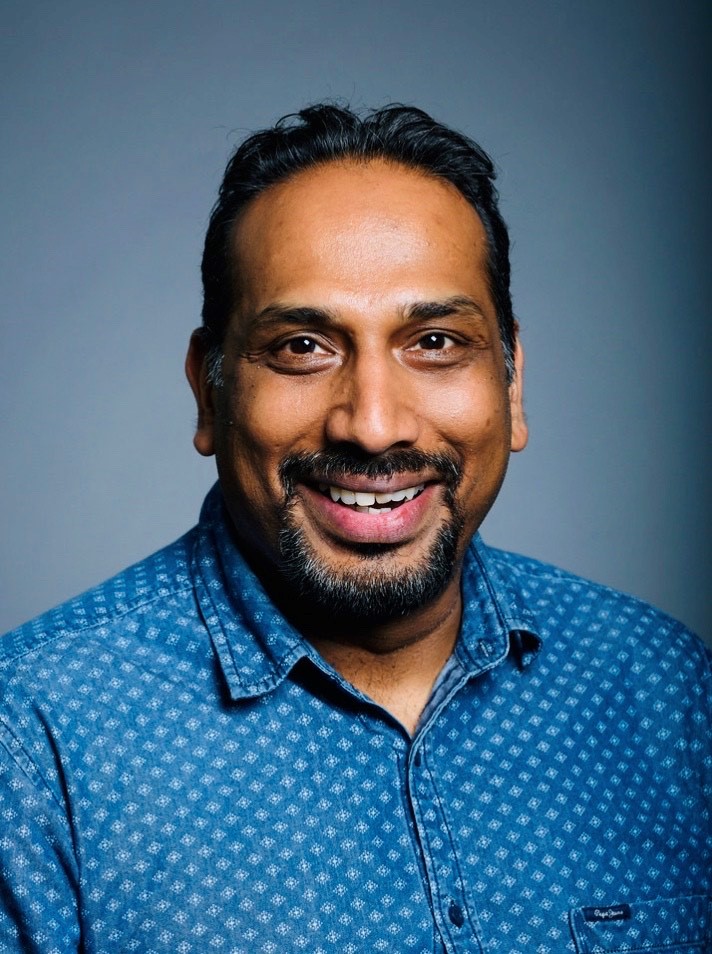
Aditya Johri – 2022 Mentoring Excellence Award Recipient

Dr. Johri’s Nomination

I would like to nominate Dr. Aditya Johri for the OSCAR Mentoring Excellence Award. Dr. Johri has been a staunch supporter of my own research throughout my time at GMU and has made my transition into my academic program comfortable through the trying times of the COVID pandemic. It is a nerve-wracking experience to move across the country to an entirely new state and start a new program, but Dr. Johri has been the difference-maker throughout.

However, I see Dr. Johri’s commitment to student support, not just in my own mentorship. As a GTA, I observed how Dr. Johri created a collaborative environment for the students in the class to engage with the resources and build vitally essential support networks. Throughout the course, Dr. Johri made the connections between the theory, the practice, and how students can be a part of the change through getting involved in undergraduate research. Dr. Johri is an inspiring instructor with a keen pulse on the future of technology and how it affects people through the media we use. This shows through the types of immersive learning experience he builds into the class. Dr. Johri provides relevant real-world examples by linking the theoretical resources presented in the class to engaging activities such as discussion-based role-play scenarios. The role-play component especially is a unique way of delivering the course materials, and students showed nothing but praise for the distinct use of the medium. Dr. Johri has gone out of his way to create opportunities for students to engage in situated learning pedagogy through a very learning-by-doing approach. Through important discussions on facial recognition technology, the implications of corporate social responsibility, and what students can learn about ethics as early-career professionals, Dr. Johri compassionately led the students to explore complex and challenging scenarios. The most important aspect; he did this in a way that still established a positive learning environment for everyone involved.

I always appreciate how Dr. Johri’s classes challenge everyone in the room to think critically and introspectively about the course material. I have served as a Teaching Assistant for over seven years, but assisting with Dr. Johri’s classes has been the first opportunity where I have learned just as much as the students I am working with. To me, this is a characteristic of a quality classroom environment. Through the course assignments and role-play activities, I was consistently challenged to think of how the technologies truly affect us as participants of a technology-driven society. Bringing in conversations with other faculty members and industry professionals representing other domains has been an invaluable resource. These discussions among other thinkers who can attest to the importance of technology ethics no matter the specific discipline of engineering or computing highlights the importance and timeliness of Dr. Johri’s teaching philosophy. These assignments encouraged me to think differently about the place of technology ethics in our society today. Dr. Johri’s classroom discourse has carried over into other areas of my academic studies and given me the confidence to engage in meaningful conversations with my peers about this challenging topic.

After the course was over, Dr. Johri encouraged students to continue working on the concepts in whatever way they could. Through an NSF grant, Dr. Johri was able to procure funding for students to perform a summer internship and continue engaging with the topics we discussed during the class. Of the 12 interns we had last summer, three students were initially a part of the class and continued working with the topics introduced in the course. Dr. Johri allowed them to pick topics from the class they were most interested in and guided them in collecting data, analyzing it, and finally bringing it together in the form of a publication. From the student reflection exercises, it was evident that students appreciated this style of learning and research. In a world of rules, the interns were given the power to create their means of interaction. I have no doubt this will be a fundamental experience for these students.

Categories
Excellence Award Winners

Ashley Rodriguez – 2022 Student Excellence Award Recipient

Ashley’s Nomination

In the many years I have known her, Ms. Rodriguez has pursued and excelled in a diverse set of research experiences. In Fall 2020, she completed a CRIM 498 “Independent Research Practicum” with me, studying racial differences in pretrial supervision outcomes. In the same academic year, she completed the honors seminar sequence in Criminology, Law and Society, earning her honors distinction in our Department. In Summer 2021, she applied to and was accepted into a National Science Foundation-funded Research Experience for Undergraduates at the University of South Carolina. Through this project, she gained experience conducting qualitative observations of virtual court hearings. During the same summer, she competed as part of the National Institute of Justice’s “Forecasting Recidivism Challenge” with a team of researchers (myself, Dr. David Wilson, and Dr. Peter Phalen) to apply machine learning methods to predict parolees’ likelihood of recidivism following release. Through this competition, Ms. Rodriguez helped her team earn several ranked finishes and $18,000 in prize money. Most recently, Ms. Rodriguez received a $1,000 grant from the OSCAR Undergraduate Research Scholars Program to study the effects of the presentation of pretrial risk probabilities on pretrial release decisions. She successfully navigated putting together materials for this vignette study, secured institutional review board approval, and is in the process of data collection. Through these activities, Ms. Rodriguez has produced seven conference presentations (four as first author), three research reports, and one book chapter. 

Remarkably, Ms. Rodriguez has accomplished all of this while maintaining part-time employment outside of Mason and a paid research assistantship in my lab. She is an exceptional emerging scholar and has already earned herself three fully funded offers to doctoral programs in criminology. She is an outstanding ambassador for Mason, for OSCAR, and for the Department of Criminology, Law and Society. I give her my highest recommendation for this award.

out.

Categories
Excellence Award Winners

Erika Kennedy – 2022 Mentoring Excellence Award (Graduate Student) Recipient

Erika’s Nomination

Erika helped connect me with several projects and professors I did not know were affiliated with the study where we initially worked together. I was a curious but overwhelmed student researcher, unsure of how to start developing my ideas. Erika took notice of my desire to become more involved and reached out to inform me of the many opportunities my RA position offered. During the Summer Team Impact Project we worked on together, she kept in touch with undergraduate researchers to make sure that we were making headway on our projects. Erika was always available for questions, and she happily gave guidance to all of the small groups as we proposed and answered research questions. She has nearly-unlimited patience, and was always willing to give aid to myself and the other undergraduates working on the project. Throughout the summer, she was always willing to listen to my ideas and help me reframe them into actionable steps and answerable questions. Additionally, she went above and beyond to make sure that our study participants were well accommodated; she displayed immense empathy for the students who participated in our study and gave open and vulnerable interviews. She enabled us to take the lived experiences of GMU students and translate them into data showing how the COVID-19 pandemic impacted students in all domains of life; her commitment and direction played a huge role in the success of our STIP. 

During and after her time as a GRA with the Health Starts Here study, Erika has mentored undergraduate students as we learned how to develop our own research project ideas. She has taken time out of her own busy schedule to ensure that we understand the nuances of proposing, researching, analyzing, and writing. Even after her time as a GRA, she has stayed involved and given many hours of her time each week to aid students who are trying to navigate the research process. 

Erika’s mentorship has made my time as a student researcher incredibly rewarding. I deeply admire her intellectual curiosity and enthusiasm for her field, and I hope to model those traits in the future. She has equipped me with the knowledge and skills to branch out and take on new and more difficult projects; Erika has been an incredible role model, and I firmly believe that her work as a mentor deserves recognition. 
Categories
Excellence Award Winners

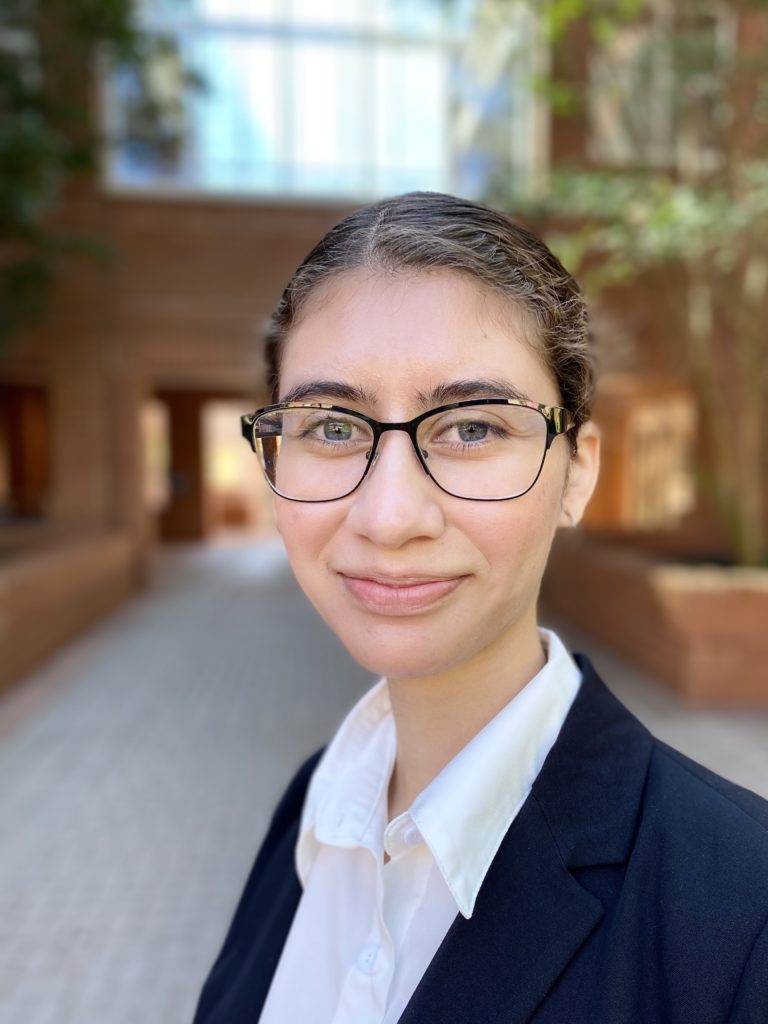
Eman Jaradat – 2022 Student Excellence Award Recipient

Categories
Excellence Award Winners

Elizabeth Freeman – 2022 Mentoring Excellence Award Recipient

Dr. Freeman’s Nomination

 I have been working closely with Dr. Freeman since spring 2020 on an elephant hormone research project that has involved multiple URSP student scholars whom we have co-advised: Simran Chambers and Alexa Herrerias (both in summer 2020) and more recently Garrett Rich (fall 2021 and spring 2022). Navigating the pandemic in spring/summer 2020 was of course quite challenging; Dr. Freeman was invaluable in finding alternate projects that our students could do remotely, pivoting all advising and instruction to online and keep both students motivated and encouraged. She has since continued to give all of our students invaluable mentoring experiences and professional guidance, for example bringing Garrett Rich to the Baltimore Zoo and National Zoo to meet with the elephant keepers directly, and encouraging him to join international societies and attend professional conferences on elephant biology and wildlife endocrinology. All our URSP students say they have enjoyed their experiences immensely, have grown as scholars and as scientists, and all tell me they have greatly appreciated Dr. Freeman’s professionalism, encouragement, and guidance.

Categories
Excellence Award Winners

Tom Lopez – 2022 Student Excellence Award Recipient

Tom’s Nomination

Thomas is an amazing undergraduate researcher! I first became impressed with Thomas’ proposal, which was written completely on his own. I only met him after he had written the proposal and was looking for a mentor who would guide his work. While I was initially hesitant to serve as his mentor because I am not an expert in the exact species of fish he wanted to study, I couldn’t take the risk that he wouldn’t find someone to take him under their wing. His passion and expertise was obvious right from the start and I didn’t want his enthusiasm to be stifled by not being able to find a mentor. His ability to convey the importance of his work and the clarity of his intended research design were really impressive. In addition to having excellent scientific communication skills, he also has the temperament and perseverance to carry out his research project. His project suffered several delays that were beyond his control throughout the Fall 2021 semester, but he never lost his desire to set up his project and move forward. While he waited for his intended OSCAR project to finally start, Thomas very willingly took on a small side project to help me optimize the raising of our zebrafish embryos in the aquatic facility. He went above and beyond analyzing our protocol and troubleshooting aspects of it that he felt were inadequate for raising fish to adulthood. Thanks to his meticulous work, we now have a path forward to raising what I hope will be generations of healthy and productive zebrafish in our facility. In fact, the fish he raised in October have already matured and spawned healthy embryos we used in our BIOL323 Developmental biology lab this semester! Overall, I think Thomas is a fantastic undergraduate student and hope to continue to call him my colleague for many years to come. For all of these reasons, I nominate Thomas Lopez.
Categories
Excellence Award Winners

Grace Loonam – 2022 Student Excellence Award Recipient

Grace’s Nomination

Grace is currently a senior at George Mason University (GMU), earning a degree in Environmental Science. She is one of the best undergraduates I have ever had in my research lab, which includes ~20 other undergrads over the past six years. I have known Grace since May 2019, and she has been an OSCAR research student in my lab each summer since 2019. She is such an exceptional student that I have continued to mentor her and encouraged her to write a proposal for a GMU undergraduate research scholarship for last summer, which was accepted, and funded her to do research at the Shoals Marine Laboratory on an island off the coast of Maine. We have two papers in revision at peer-reviewed journals (Aquatic Invasions and Freshwater Biology), and she has already presented her research five times. She is additionally presenting her work from this past summer at the International Benthic Ecology Meeting in Portsmouth, NH in March 2022. 

Grace applied as a freshman to be part of a team undergraduate summer research project at GMU in 2019. She immediately struck me as a determined student, and I later learned she was in the top 1% of students in the freshman class and was awarded a University Scholarship (full ride). Over the course of the summer, Grace came into the Potomac Science Center (a satellite campus for GMU) every day to crack snails with hammers and examine their tissues under a microscope, looking for parasites. Grace was interested in knowing if native species of snails had higher parasite loads than invasive snails. To do this required many hours of staring under a microscope, measuring and cracking hundreds of snails, and identifying trematode parasites. Grace did all of this, and more, with a smile on her face and determination to see the project through. The majority of my summer was spent in the field, away from the lab, but Grace worked independently and completed all of her samples with little supervision from me. Grace was the most frequently encountered student in my lab during the summer, coming in every day, and her exceptional data set is a testament to her hard work. After an initial project design period that we agreed on together, Grace led the majority of this project, including field and data collection and writing. We currently have two manuscripts in revision, with Grace as the second author, from this work. 

After that first summer, Grace was again chosen for a team undergraduate summer research project that was slated to be in-person but pivoted to online due to the pandemic. The students worked together to download water quality and microplastics datasets from freshwater systems to uncover if there were any water quality metrics that were correlated with microplastic distribution and abundance. Given the complexities of working in a group on a summer project during the pandemic, the entire student group did very well. Our mentor team met with the students every Mon, Wed, and Fri to track process or offer a personal or professional development class. At the end of the summer, they presented a combined poster that showcased their work. Throughout our collaboration, I have been impressed with Grace’s organization and writing skills as well as her willingness to learn new and relevant skills. For this particular project, she learned the basics of the free coding program R.

Most recently, Grace had her own summer OSCAR research project funded that covered her travel to and from the Shoals Marine Laboratory to study a very interesting host-parasite relationship. Shoals is located on an island off the coast of Maine; the only thing to do is science – there are no TVs, no vehicles, no shops or stores, and the very basic of living conditions for up to 100 students, scientists, and staff. And Grace loved every minute of it. Because I had worked with her so closely and knew that she was goal-oriented and dependable, I had no qualms about leaving her on the island to complete research without me. Because of the pandemic, she was unable to stay on the island continuously, so made two separate trips, each lasting about three weeks. While on island, she and another undergraduate researcher from Emory University worked together to examine some basic biological questions about the host-parasite relationship in question. While she was back at GMU, she spent every day examining the number of parasite clones released from the host under different temperature regimes to determine if increasing temperatures could lead to higher parasite transmission rates. We are currently working through those data sets, and preparing two manuscripts for submission. Grace will also give an oral presentation on her summer work at an international meeting next month.

In addition to leading her own major research project, Grace is an effective and experienced communicator. In the past three years, she has presented her research at five different conferences (GMU Undergraduate Research Colloquium, Virginia Undergraduate Research Conference, Shoals Marine Laboratory Colloquium, and GMU Honors College Research Colloquium), and she will be presenting her work from last summer at the International Benthic Ecology Meeting in Portsmouth, NH next month. 

Grace is very strong student, and is on track to graduate this semester summa cum laude. I have only had Grace in two of my classes, both this academic year. Last semester, she took Freshwater Ecology with me and was the third highest grade in the course out of 16 students (A+ at 98.6%). Grace is currently in my Marine Ecology class, and is excelling. Having been both in the field and lab with Grace, I would not hesitate to have her join me in any aspect of science again or recommend her to my closest colleagues. She is intellectually curious about all things and is extremely mature and self aware. Her humility, work ethic, honesty, drive, and earnestness is beyond reproach. She is generous with her time and often helps other students in the lab complete tasks that have nothing to do with her project. She is such a nice person, respectful of others and sets a wonderful example in terms of enthusiasm and work ethic. I cannot think of a time when her presence was not positive. 

While most of my connections to Grace have been through my research laboratory, she is an active member in championing environmental causes both on and off the GMU campus. For spring break 2019, Grace participated in a week-long field experience along Florida’s coastal, marine salt marsh systems. Her team worked on eradicating invasive plants and also placed substrate to help naturally recruit oysters into the area. Due to her enthusiasm and drive, Grace was planning on returning to the project spring break 2020 as a trip co-leader. She has taken on the responsibility of developing and coordinating the week-long experience, adding several new projects, and following up with participants during the weeks after the project. Unfortunately, the program was canceled due to the pandemic. During winter break 2019-2020, Grace traveled to the Amazon rainforest during a study abroad program. One large aspect of the trip was to understand the intersection between preserving the culture of the native people and the biodiversity of the region. Working with all stakeholders (i.e., faculty, students, native peoples), they sought to cultivate sustainable development projects. Along this same vein, Grace worked last year as an Assistant Researcher under a collaborative effort at GMU. Grace completed a literature search under the tutelage of several professors from different GMU colleges to collect historical United States indigenous knowledge about sustainable water usage and how indigenous peoples viewed western settlement.

Overall, I would rate Grace among the top 1% of undergraduate students in lecture/labs/research, taking into account intellect, abilities, and dedication. I have never had an undergraduate student in my lab that was as goal-oriented or self-motivated as Grace. In fact, I have a hard time comparing her to any of the other undergraduates that I know in my department. I think a better comparison is to Masters students. Because of Grace’s work ethic, ability to juggle multiple commitments, desire to volunteer her time to community efforts, commitment and experience leading her own project, performing various field and laboratory methodologies, developing and answering research questions, and demonstrating the ability to learn new techniques, Grace is truly the epitome of an excellent student. All of these characteristics will be valuable as she continues to work towards a career addressing environmental issues at different scales. Grace would eventually like to become a college professor, after obtaining her PhD and more experience as a postdoc. I fully recommend her for an OSCAR Student Excellence Award without any reservation. Please do not hesitate to contact me about this recommendation. I would be happy to talk to anyone on the review committee.
Categories
Excellence Award Winners

Tulane Simpson – 2022 Student Excellence Award Recipient

Tulane’s Nomination

Tulane Simpson is an exemplary writer and scholar. In the brief time I’ve known them, Tulane has masterfully and repeatedly proved their skills at academic synthesis, planning and organisation, critical thinking, providing feedback, and analysing sources. In record-breaking time, Tulane has won my respect.

Tulane’s topic is one of their own invention: ecoandrogyny, a concise term aimed to deconstruct a gender binary inherent to environmentalism and environmentalist media. This binary is depictions of ‘destructive’ masculinity versus depictions of ‘constructive’ femininity; for example, the Earth-polluting antagonists are usually male and the protagonists always have a ‘Mother Earth’ figure on their team. However, this kind of imagery fails to account for the fact that both men AND women pollute the Earth, and ‘masculine’ traits like aggression and assertiveness are actually essential for the environmental movement. Thus, Tulane coined the term ‘ecoandrogyny’ and created a framework for finding ecoandrogynous art to prove that a gender neutral approach to environmentalism is present and deserves attention. They are analysing children’s media that supports ecoandrogynous thinking as an alternative to conventional environmental children’s media (think Captain Planet or FernGully).

Tulane saw a niche in environmentalist media, found a slew of scholarly and lay sources that corroborated their ideas, then applied an academic framework to create a cross-cultural synthesis. Their work is exceptional. While their project may be ambitious, I can testify that Tulane has been more than up to the task thus far, always coming to class prepared and always communicating their thesis with precision and clarity. I am often astounded by how professional and scholarly they are just in class discussions. Tulane finds the right questions to ask every time, and they always have a thorough response when posed with a question.

Tulane correctly postulates that narratives focusing on black and white, male and female, good and evil binaries are limiting to our understanding of environmentalism, and they endeavour to synthesise a new paradigm for both media and environmental studies. Because of their original ideas, phenomenal dedication, and consummate scholarship, I cannot think of a better candidate for this award.

.

Categories
Excellence Award Winners

Sydney Foss – 2022 Student Excellence Award Recipient

Sydney’s Nomination

Sydney has been a volunteer researcher in my laboratory for over two years, and has been completing a research project with OSCAR funding since September of 2021. As a researcher, she is dedicated, enthusiastic, inquisitive, thoughtful, and diligent. She has been deeply involved in her project at all stages: conceptualization, design, planning, and now implementation/data collection. She is currently testing 4- to 5-year-old children in the Developing Minds lab, assessing their logical abilities in playful and serious contexts. Her research activities have culminated in a presentation at a National Conference–Association for Psychological Science Annual Convention, to be held in May, 2022. She also went above and beyond and made a highly creative video to describe her research project for the OSCAR celebration. She will graduate this year so this is her last chance to be considered for this award. She has committed to seeing her project through to completion this summer, and will play a significant role in data analysis and manuscript preparation. As a member of the Developing Minds Lab, she has never wavered in been positive, collaborative, open to constructive feedback, and supportive of other lab members’ learning. In short, she has made outstanding research and creative contributions as a student scholar and I unreservedly nominate her for this award.
Categories
Excellence Award Winners

Samaine Lockwood – 2022 Mentoring Excellence Award Recipient

Dr. Lockwood’s Nomination

I would like to nominate Dr. Aditya Johri for the OSCAR Mentoring Excellence Award. Dr. Johri has been a staunch supporter of my own research throughout my time at GMU and has made my transition into my academic program comfortable through the trying times of the COVID pandemic. It is a nerve-wracking experience to move across the country to an entirely new state and start a new program, but Dr. Johri has been the difference-maker throughout.Samaine has helped guide me since the beginning of last fall. Without her help, I would have never heard of the URSP program and many of the available opportunities at Mason. She is dedicated to her field and knowledgeable on its functions, passing on this information to students. I appreciate the hard work that she has put into being my mentor. I believe her assistance has helped foster a community of scholars; I saw this in my class last semester. Many of my fellow classmates were able to put together an archive of information for literary works. This helped develop the portfolio and future careers of the English majors in that class. 

Categories
Excellence Award Winners

Robert McGrath – 2022 Mentoring Excellence Award Recipient

Dr. McGrath’s Nomination

Professor McGrath is a knowledgeable and caring mentor who manages and encourages team to achieve the goal. I was lucky enough to have him as my mentor for summer project.